Companion
Interactive Halloween Prop —
Brain Reanimation
An experiment in interactive storytelling through physical technology.
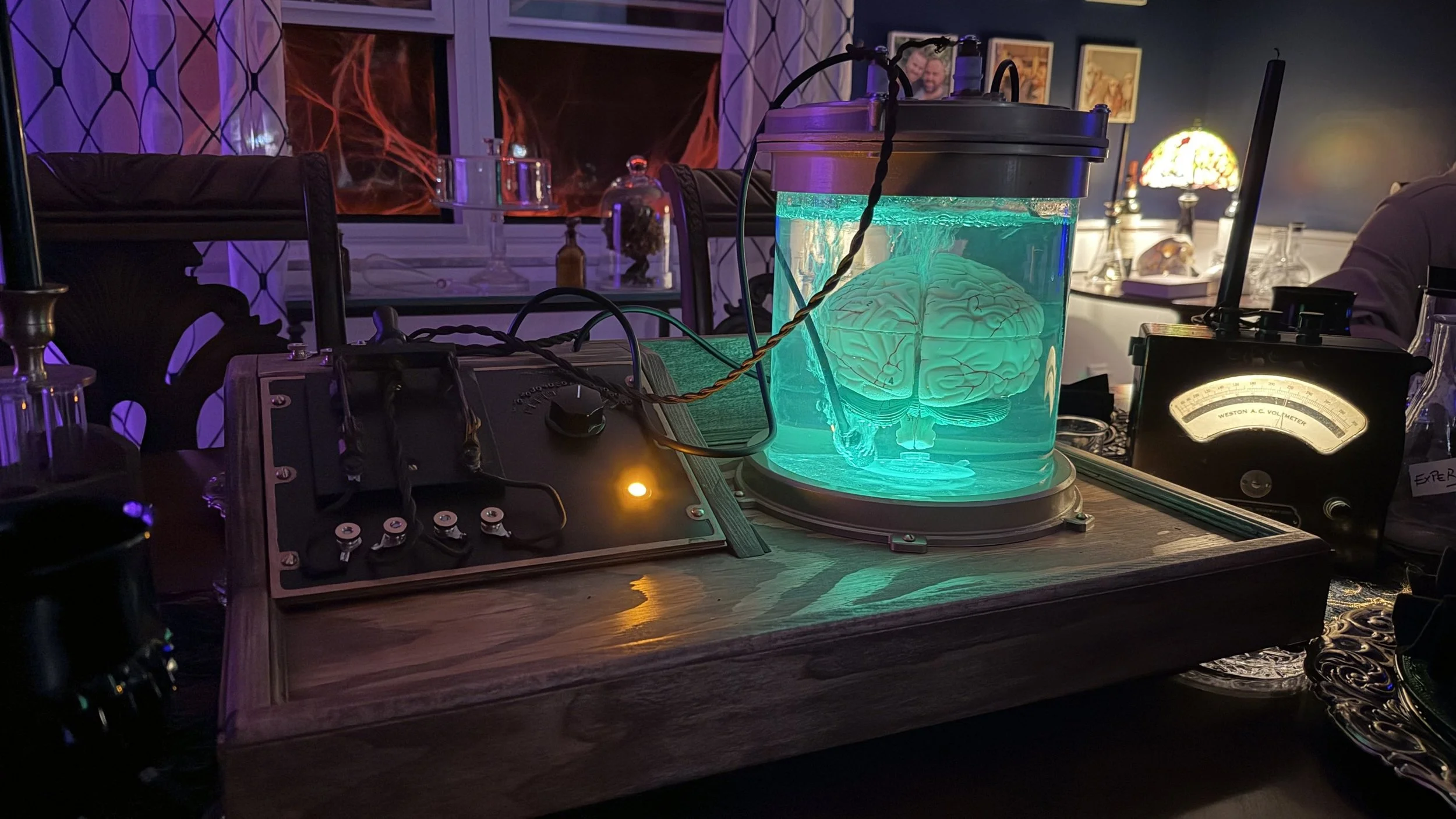
A theatrical reanimation apparatus combining vintage scientific instrumentation, custom electronics, physical controls, lighting, sound, and interactive effects into one immersive experience.
- Interactive Experience Design
- CAD & 3D Printing
- Wood Fabrication
- Embedded Electronics
- ESP32 Development
- Analog Instrument Control
- Lighting & Sound Design
- Home Assistant Integration
More than a Halloween decoration.
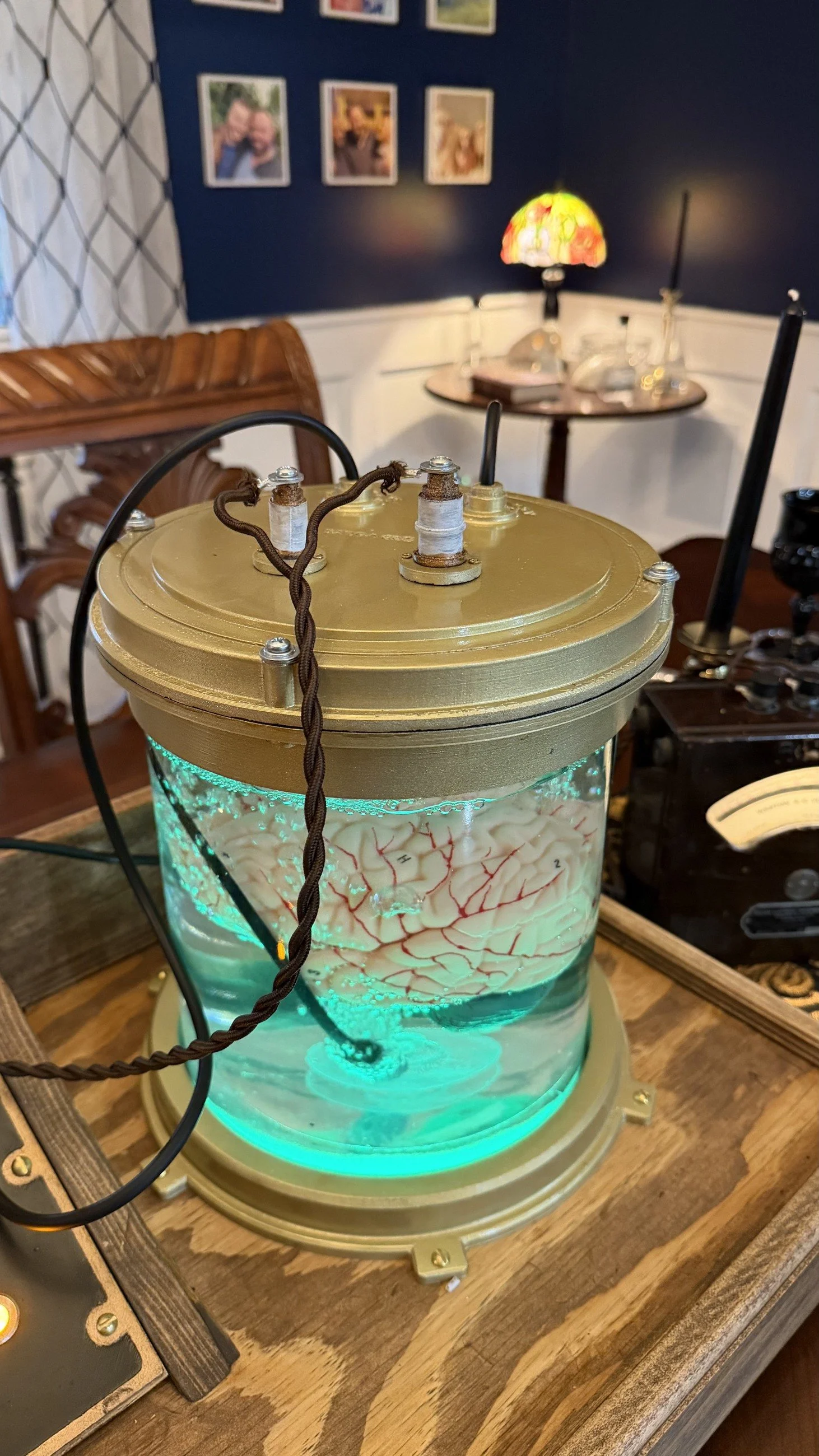
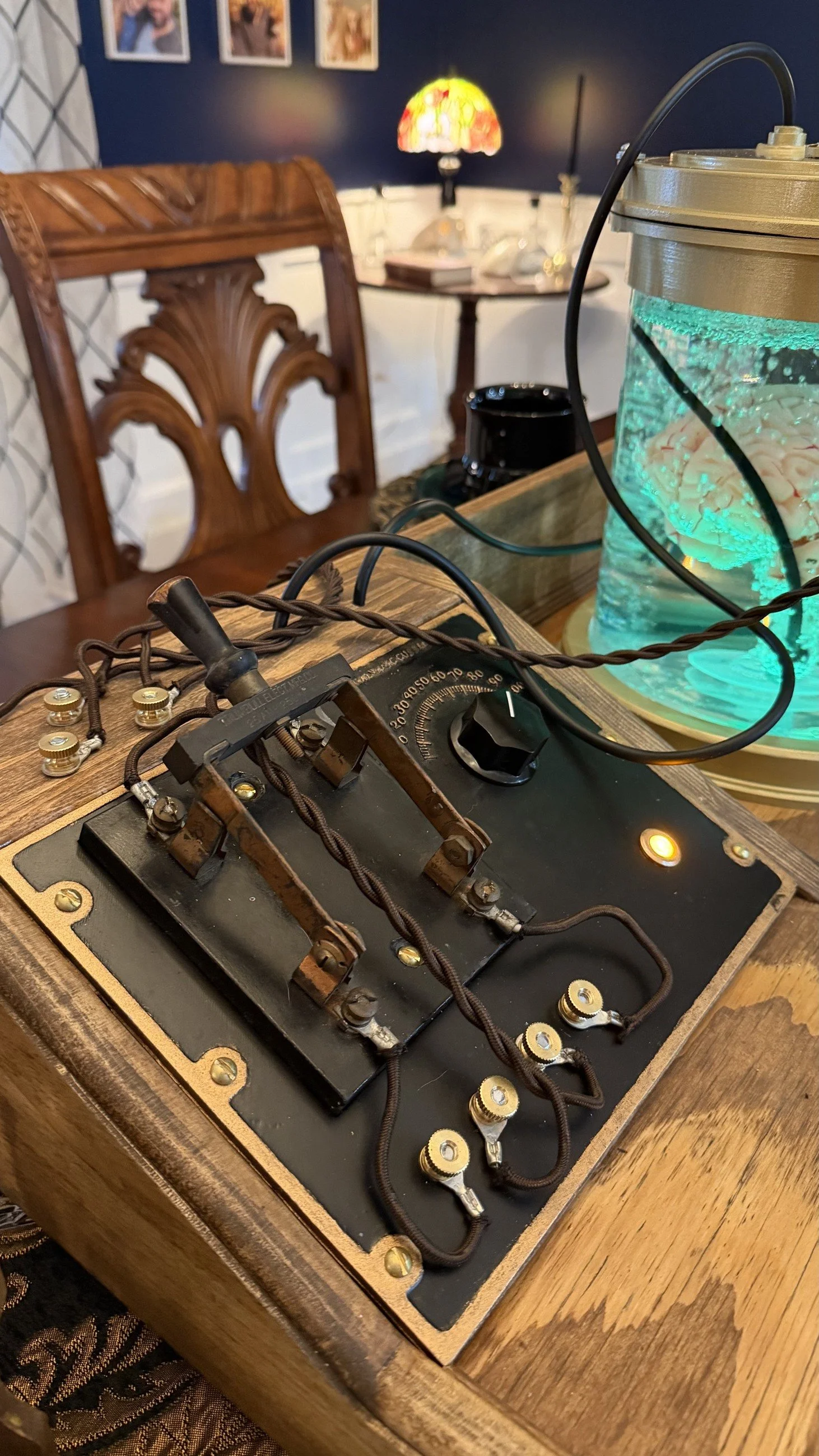
The project began as a dining-room centerpiece: an anatomical brain model suspended in a glass vessel, surrounded by the instruments of an imagined early electrical laboratory. It quickly became a question of how that object could respond to a person.
Guests would throw a knife switch, adjust a regulator, and discover the consequences. The aim was a believable apparatus whose controls, materials, and behavior belonged to the same fictional machine—an invitation to experiment rather than a preset animation.
A machine from another era.
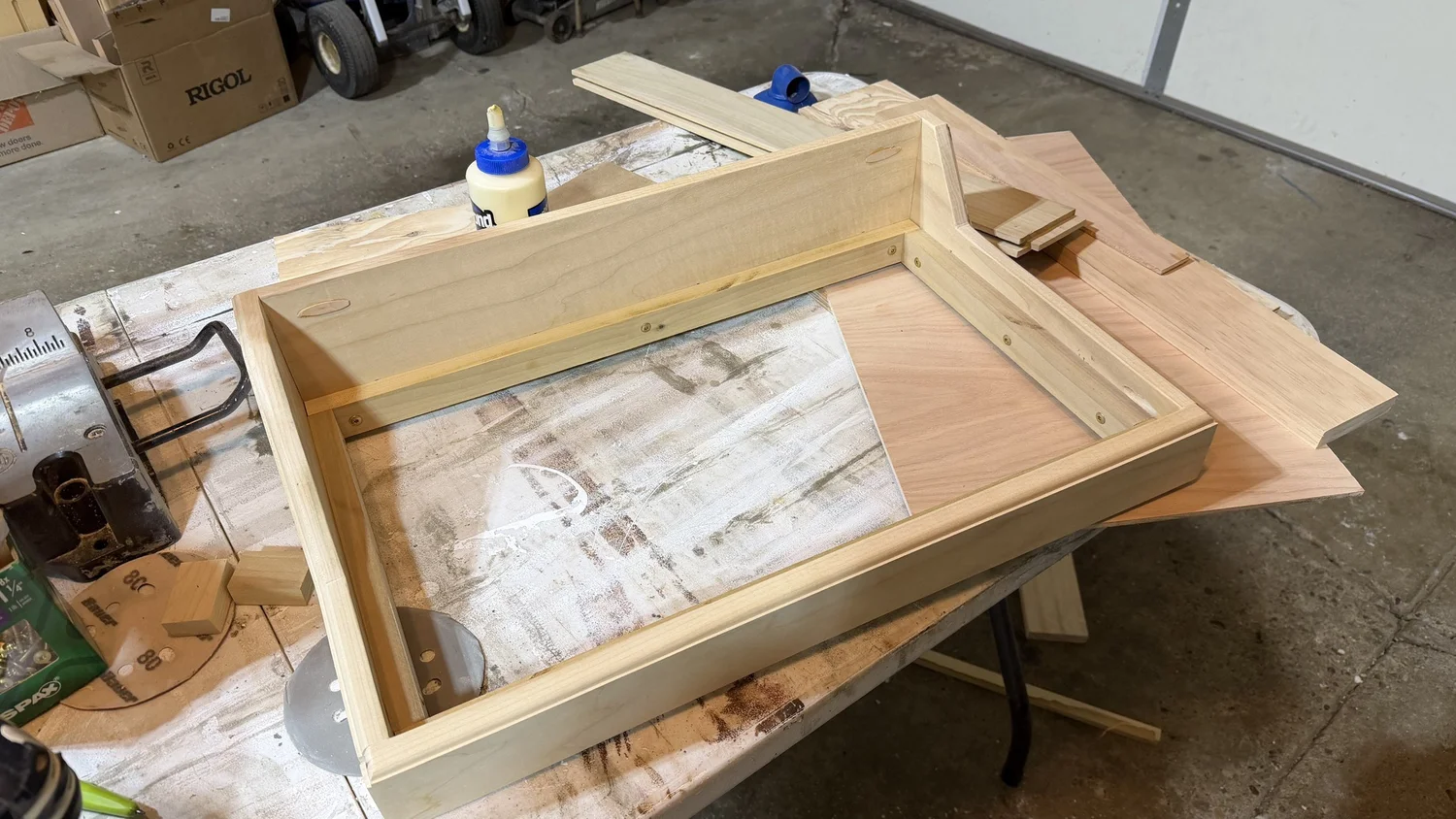
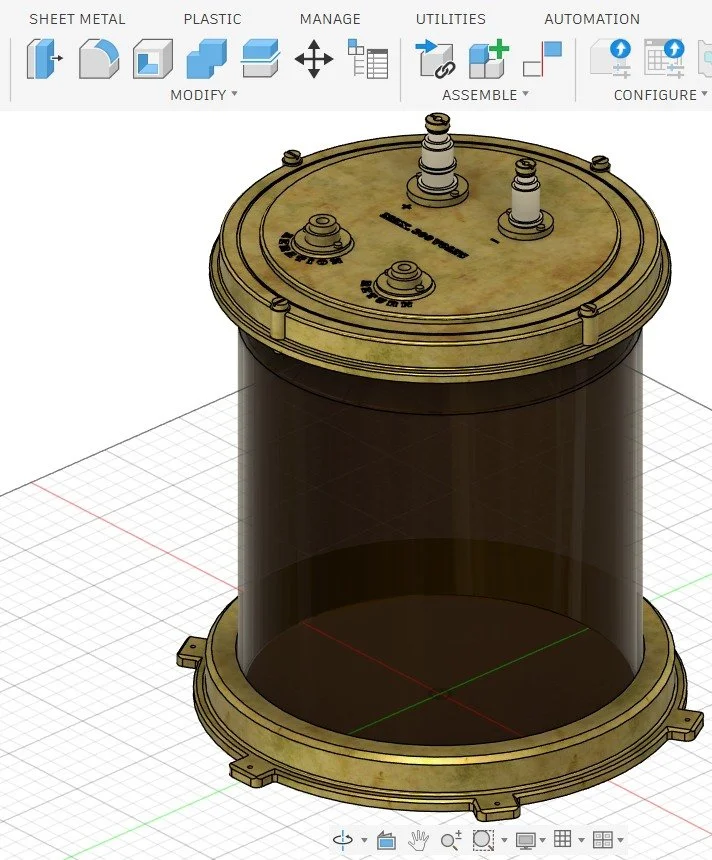
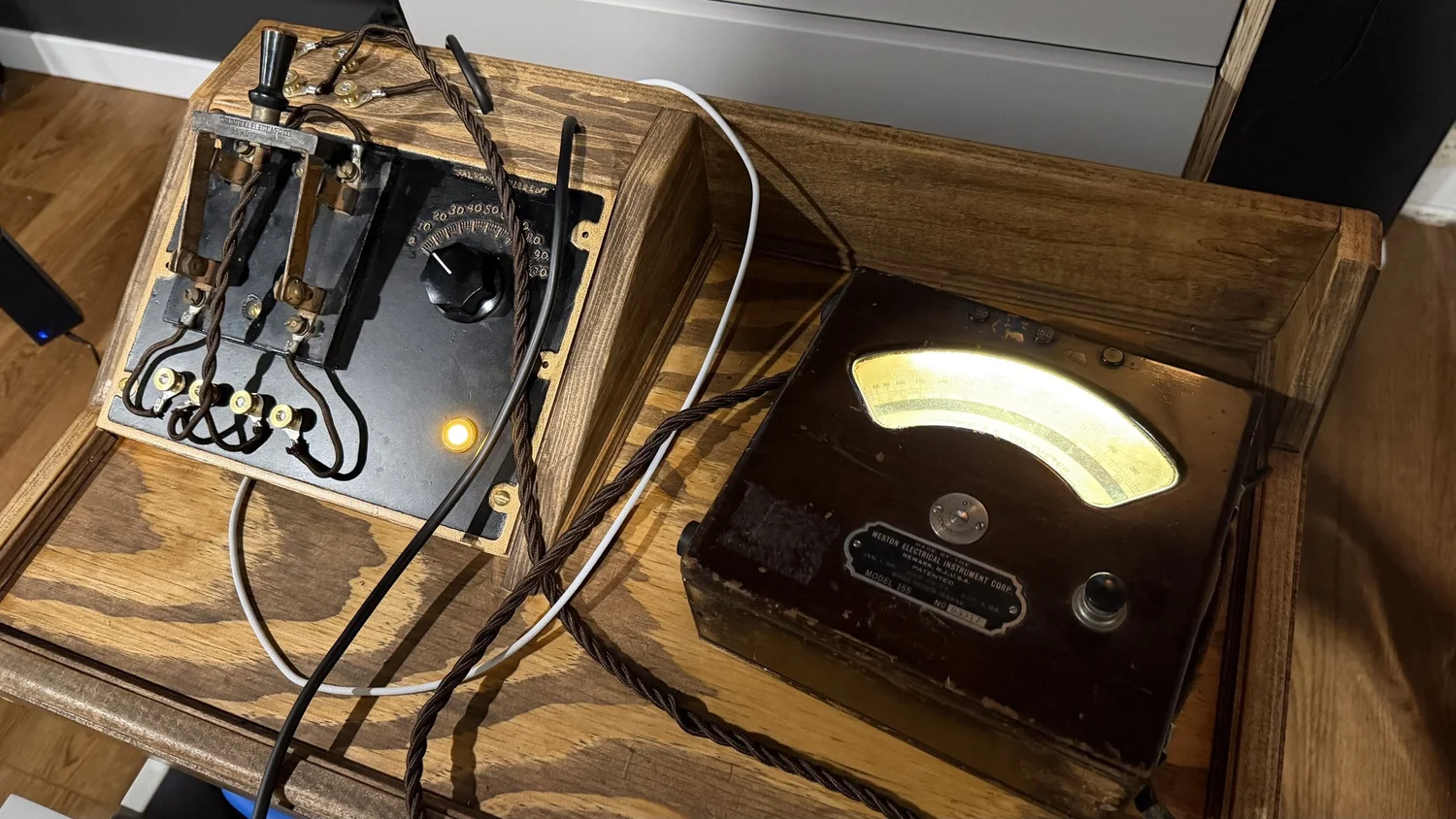
The substantial wooden tray was built around the actual glass vessel and physical hardware. An angled operator panel made the controls easier to reach and gave the enclosure the presence of an early test instrument.
Stained wood, black instrument panels, aged brass finishes, cloth-covered wiring, exposed terminals, and slotted fasteners establish a shared visual language. The result draws on late-19th- and early-20th-century science without attempting a strict historical reproduction.
Designed to be operated.
The knife switch starts a deliberate energizing sequence. The rotary regulator then controls the apparent energy delivered to the specimen: the vessel brightens, bubbling grows more aggressive, the meter rises, and the machine becomes increasingly energized.
At low settings the response is predictable. Advancing the regulator gradually introduces instability. These controls feel like parts of the apparatus’s fictional purpose, encouraging people to learn through physical experimentation.
An instrument with a personality.
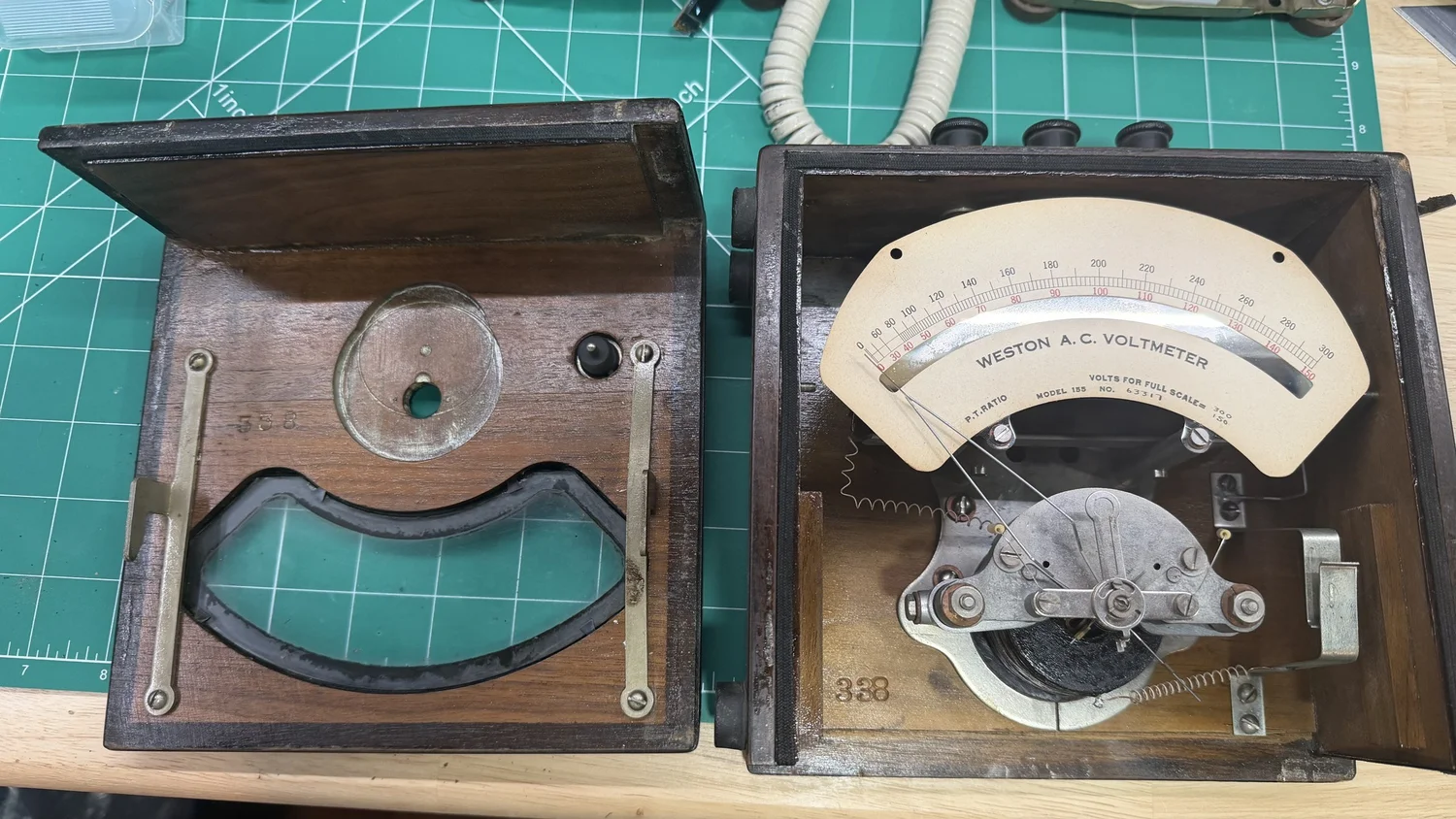
The original Weston analog meter is an active part of the experience. A custom analog driver circuit translates the ESP32’s control signal into needle movement within a calibrated safe operating range for the vintage instrument.
During normal operation it follows the regulator. Instability introduces surges, dips, overshoot, and mechanical recovery. Even its collapse is staged: the needle participates in the machine’s struggle instead of simply dropping straight to zero.
Modern technology beneath an antique exterior.
An ESP32 coordinates a control system assembled from functional modules, discrete circuits, and wiring. MOSFET-based output control modulates the vessel lighting and aeration pump, while separate power rails support the apparatus’s different electrical requirements.
- ESP32 controller & physical inputs
- Knife switch & regulator potentiometer
- RGB vessel lighting & aeration pump
- Custom analog meter driver
- Weston illumination & indicator lamp
- DFPlayer Mini audio & amplification
- MOSFET load control & power distribution
- MQTT state communication
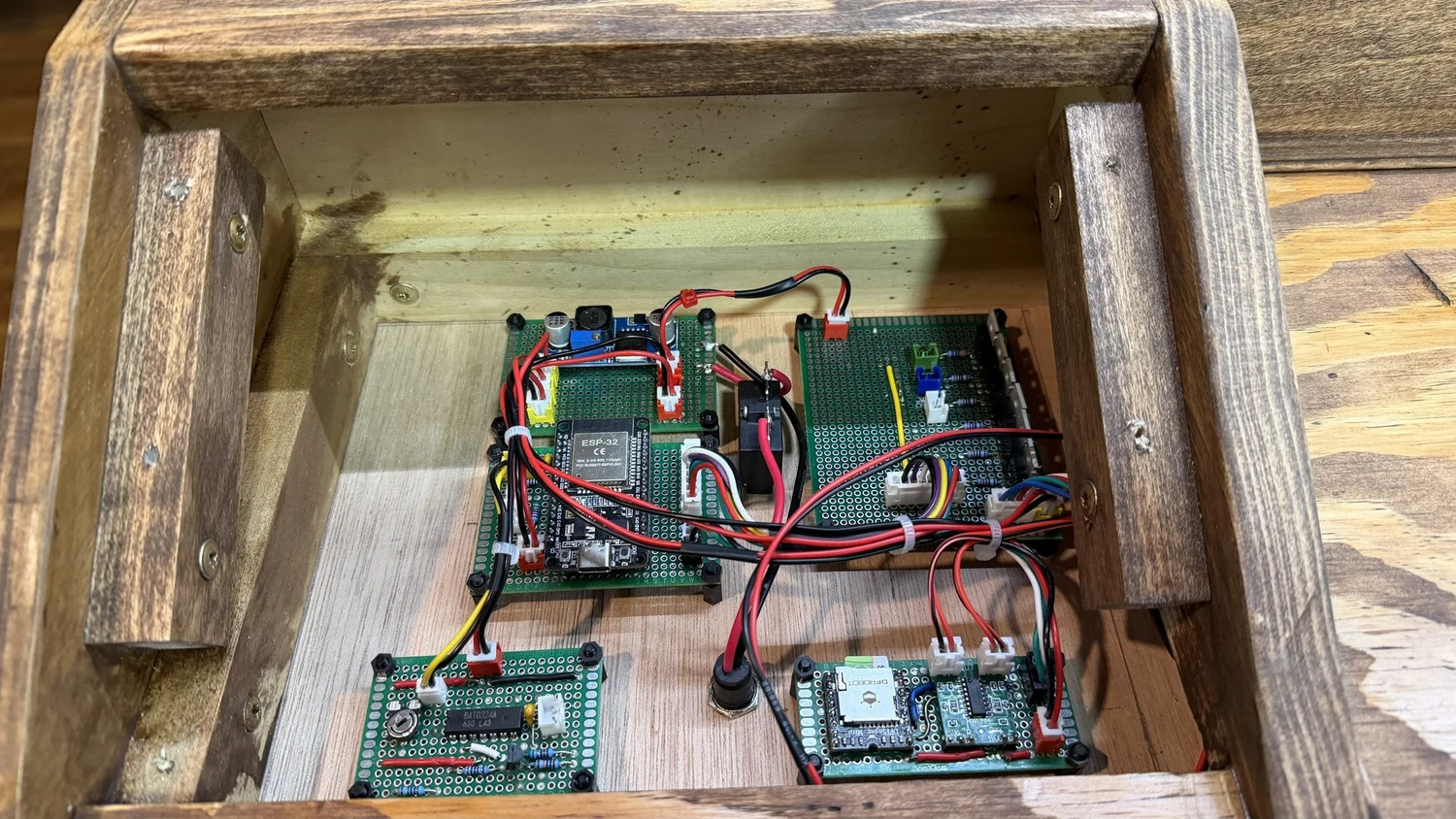
Failed components, wiring faults, power issues, and calibration all became part of development. Dividing the electronics into functional sections made those problems easier to isolate, revise, and test as the complete experience took shape.
A machine that behaves.
The software organizes the apparatus into theatrical states. Each coordinates lighting, bubbling, sound, meter movement, and operator input, so the machine changes character as a whole.
- StartupA deliberate energizing sequence.
- Normal operationThe apparatus follows the regulator.
- InstabilitySurges and irregular responses appear.
- Critical overloadThe operator can still back down.
- Collapse & blackoutFalse recovery gives way to failure.
- Failed stateThe machine stays dark and silent.
- Gradual recoveryActivity returns in stages.
- Stabilized operationThe apparatus regains its composure.
Light reacts quickly.
LEDs can answer an electrical disturbance immediately; the indicator lamp fades rather than snapping off.
Bubbles take time.
Pump surges last longer because aeration has slower physical dynamics than light.
The needle has weight.
Mechanical lag, overshoot, and recovery help the meter feel like a struggling instrument.
Sound is part of the same timing system. Startup, operating hum, electrical strain, collapse, and recovery audio follow the machine’s behavior; the final impact is aligned with the blackout.
Did I break it?
Pushing the regulator too far begins an escalation rather than a single abrupt effect. The vessel destabilizes, the pump surges, the needle fluctuates, and electrical sounds grow more aggressive.
Backing down during the critical phase can recover the machine. Continuing takes it past a point of no return: partial collapse, an apparent struggle back to life, one final surge, and a heavy electrical impact as the apparatus fails.
The vessel, indicator, meter illumination, pump, needle, and sound all participate in the collapse. Then the machine stays dead long enough for its operator to wonder what happened. Only after that pause does a slow recovery begin.
“What happened? Did I break it?”
A friend’s reaction during an early interaction, after the apparatus and dining-room lamp went dark. The uncertainty was the response the sequence was designed to create.
Beyond the apparatus.
The Brain Tray operates autonomously. Its core behavior runs locally; MQTT publishes theatrical state changes that Home Assistant can optionally use elsewhere in the room.
For the first installation, a dining-room lamp joined the blackout and returned as recovery began. The prop leaves the lamp alone during normal operation. That brief change in the surrounding room makes the failure feel larger than the apparatus itself.
- Brain Tray
theatrical state - MQTT
state message - Home Assistant
room automation - Dining-room lamp
blackout / recovery
From concept to reaction.
The finished centerpiece brings the fabricated enclosure, fitted vessel components, original instrumentation, and responsive electronics into one physical experience. It was built to be approached, operated, and discovered.
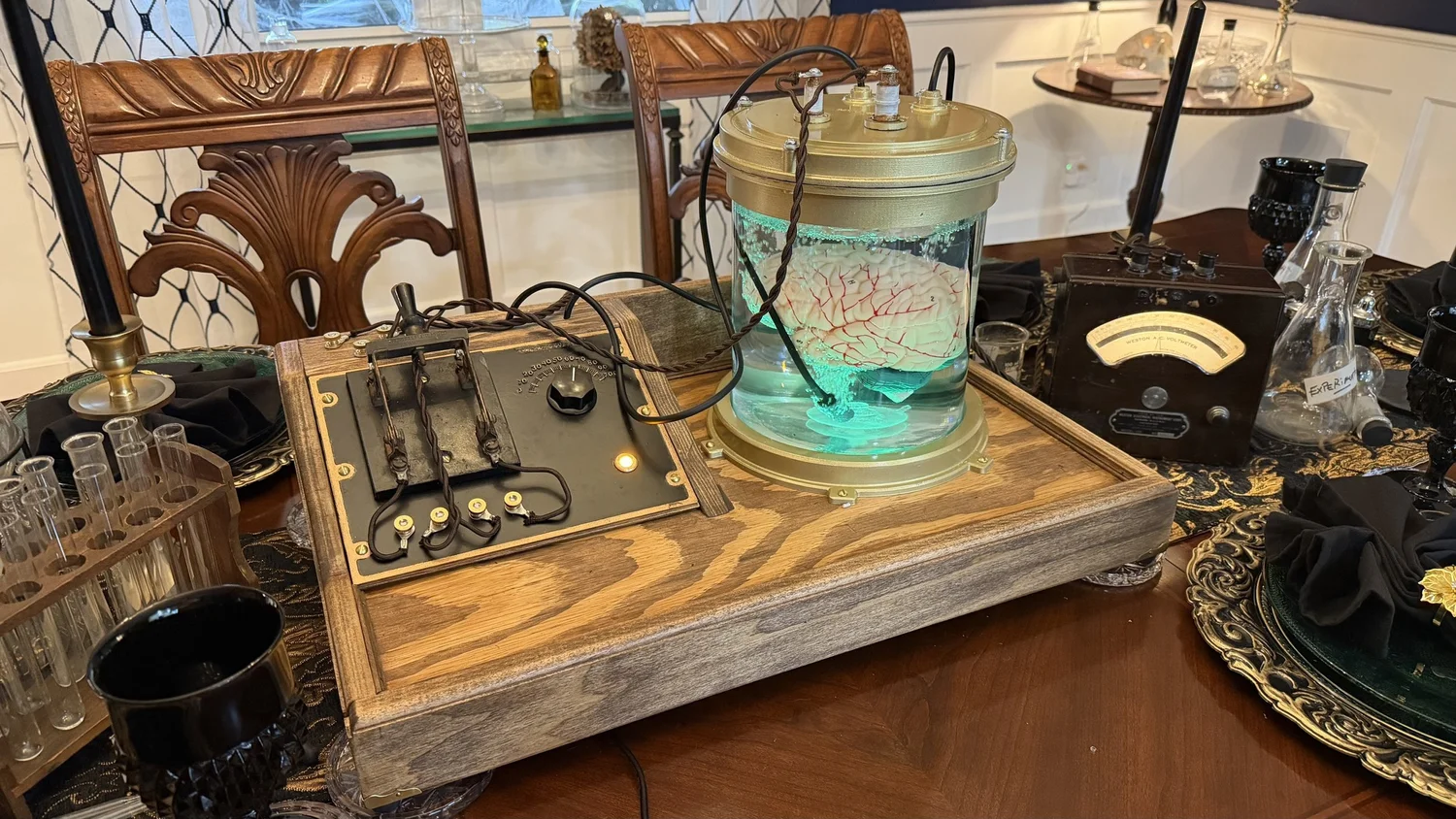
Watch the apparatus respond.
Full demonstration · 2 minutes 48 seconds · Original stereo audio
Press play to see the controls, meter, overload, blackout, and gradual recovery. The dark pause is intentional.
One continuous demonstration preserves the timing of the failure and recovery. Useful moments, approximately:
- 0:00Startup & physical controls
- 0:44Weston meter detail
- 1:43Blackout & intentional pause
- 2:09Recovery begins
A complete experience, built in approximately one month.
The project moved from concept through design, modeling, fabrication, wiring, programming, debugging, and refinement to a functioning interactive apparatus. Real visitors could experiment with it and discover its behavior for themselves.
Technology does not need to announce itself as technology.
It can disappear into an object, support a story, invite curiosity, and create a moment people remember.
Let’s create something memorable.
From interactive props and specialty displays to custom electronic experiences, The Tailored Companion combines physical design and modern technology to bring unique ideas into the real world.
Start a Project